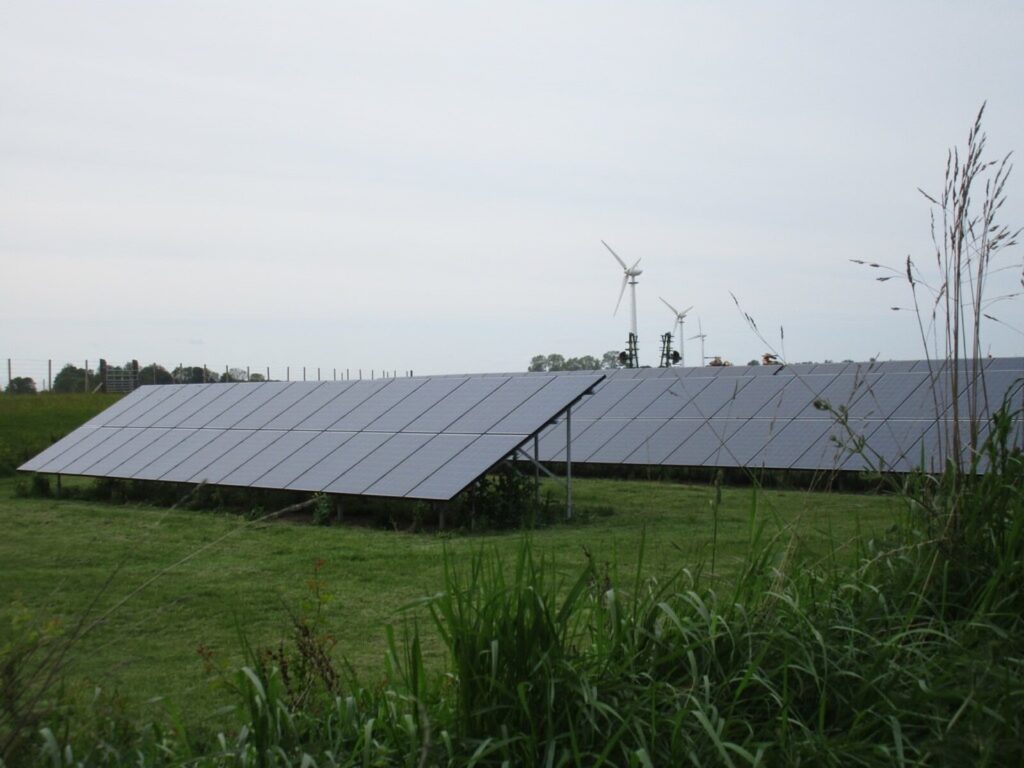
UK climate tech startups have moved from the fringe of the funding market to one of its busiest corners. These are the companies decarbonising heavy industry, storing renewable power for when the wind drops, pulling carbon back out of the air and rethinking the materials our buildings and packaging are made from. Global venture investment into climate tech reached $26.1bn in the first half of 2026, up 55% on the same period a year earlier, and Britain sits near the centre of that story with deep research strength, a maturing investor base and a national net zero target pulling demand through. This guide maps the sectors where UK climate tech startups are scaling, names the companies raising serious money, and explains what is driving the capital.
Why UK climate tech is attracting serious capital
Three forces are pushing money into the sector. The first is policy: a legally binding net zero by 2050 target, carbon pricing and sector deadlines give founders a market that is expanding by law rather than by hope. The second is demand from large corporates. Buyers including Microsoft, Shell, Salesforce, Heathrow and TotalEnergies are now signing deals with early-stage climate companies to hit their own emissions commitments, which shortens the path from pilot to revenue. The third is the shift toward hard science. Where the last clean-energy wave leaned on software, today’s climate tech is dominated by hardware and life sciences, from novel materials to reactors, and that deep-tech work is exactly what patient investors are backing.
Energy generation and storage
The largest UK climate tech raises tend to sit in power. Long-duration storage is the standout: Highview Power raised £300m in 2024, led by the UK Infrastructure Bank and Centrica, to build the country’s first commercial-scale liquid air energy storage plant at Carrington near Manchester, a 50MW/300MWh project designed to hold renewable power for hours rather than minutes. On the generation side, fusion developer Tokamak Energy secured $125m in late 2024 from backers including British Patient Capital and BW Group, part of more than $1.5bn raised across the fusion field that year. Nuclear is drawing capital too: Newcleo, building small modular reactors fuelled by nuclear waste, closed an $85m round in early 2026 and has now raised more than $755m since 2021.
Alongside the giants, a wave of smaller storage and grid companies is emerging. Allye Energy is building distributed battery systems, while JUICY targets home energy storage for a more decentralised grid. Tidal specialist Porpoise Power is chasing predictable renewable generation from underwater propulsion, and Bactery is developing electricity generation from soil microbes.
Carbon removal and industrial decarbonisation
Cutting emissions from the hardest sectors is where much of the newest science sits. Origen Carbon is scaling atmospheric CO2 capture with permanent removal, addressing the growing corporate appetite for high-quality carbon credits. In construction, Biozeroc is developing carbon-negative cement alternatives, a serious prize given cement’s outsized share of global emissions. Odqa produces solar-powered industrial heat, and Vertus Energy and WASE both turn organic waste into energy, the latter using bioelectrochemical systems. These are not consumer plays; they sell into utilities, manufacturers and infrastructure, which is why they attract longer-horizon capital.
Materials, circular economy and food
A large slice of UK climate tech is rethinking what things are made of. Xampla, a University of Cambridge spinout, makes plant-protein materials that replace single-use plastic. Epoch Biodesign uses engineered enzymes to break plastic waste back into useful chemicals, and Modern Synthesis grows biomaterials as alternatives to resource-heavy textiles. On the circular side, Sorted builds intelligent waste-sorting infrastructure and Vuala focuses on food-waste recycling. Food systems feature too, with Aquanzo producing sustainable aquaculture nutrition from organic waste and NetZeroNitrogen tackling agricultural emissions.
Buildings, adaptation and mobility
The built environment is a rich vein for founders, since buildings account for a substantial share of UK emissions. Fornax is developing low-carbon heating, Rensair makes energy-efficient ventilation that also cleans indoor air, and Natural Building Systems designs eco-friendly construction methods. Climate adaptation is a newer category: Pyri uses bio-based sensors for early wildfire detection, while Treeconomy quantifies the value of nature-based carbon removal so it can be financed properly. In logistics, Finmile optimises delivery routes to cut last-mile emissions.
Many of these companies appear in Tech Nation’s 2026 climate cohort, a group of 25 UK startups that had collectively raised more than $220m by the time they joined, averaging around £9m each, with 76% already planning to expand internationally. You can see the full cohort on the Tech Nation website.
The challenges facing UK climate tech
The sector’s momentum is real, but so are its headwinds, and any honest map has to include them. The biggest is the funding gap between a promising pilot and a first full-scale plant. Deep-tech climate companies often need to build physical infrastructure, a reactor, a storage facility, a chemical process line, which costs far more than software and takes years to reach revenue. That “first-of-a-kind” stage is where many otherwise strong companies stall, because it is too capital-heavy for typical venture funds and too early for infrastructure investors. Public backers such as the National Wealth Fund, formerly the UK Infrastructure Bank, have started to fill that gap, as Highview Power’s £300m round showed, but demand outstrips supply.
Talent and grid access are the other pinch points. Hardware businesses compete for a limited pool of engineers, and energy projects can wait years for a grid connection, which slows even a fully funded plant. Founders who plan for these constraints early, by lining up corporate offtake agreements, grant funding and grid applications well before they are needed, tend to move faster than those who treat them as afterthoughts.
What this means for founders and investors
For founders, the lesson from the current cohort is that hardware and science-led climate businesses are fundable in the UK, provided you can show a credible route to a paying customer, usually a corporate under its own decarbonisation pressure. For investors and operators, the sector rewards patience: these are longer builds than a typical SaaS company, but the demand is structural rather than fashionable. If you are tracking the wider UK startup and funding landscape, our coverage at idea London follows the companies, rounds and investors shaping it.
Frequently asked questions
What counts as a climate tech startup?
A climate tech startup builds products or services whose core purpose is to cut, capture or adapt to greenhouse gas emissions. That spans clean energy generation and storage, carbon removal, low-carbon materials, sustainable food and agriculture, and climate-adaptation tools such as wildfire detection.
Which UK climate tech startups have raised the most?
Among the larger recent raises, Highview Power secured £300m for liquid air energy storage in 2024, Tokamak Energy raised $125m for fusion in late 2024, and Newcleo has raised more than $755m since 2021 for waste-fuelled small modular reactors. Figures move quickly, so always check a company’s latest announcements.
Is UK climate tech funding actually growing?
Yes. Global climate tech venture investment hit $26.1bn in the first half of 2026, up 55% year on year, and the UK is one of Europe’s most active markets, helped by strong university research and a national net zero target that creates durable demand.
Where are most UK climate tech startups based?
London and the wider south east host a large share, but Cambridge, Oxford, Bristol and Edinburgh are significant hubs, particularly for university spinouts working on materials, energy and life sciences.
How do climate tech startups make money if the technology is early?
Increasingly through corporate contracts. Large firms facing their own emissions targets buy carbon removal, clean power, low-carbon materials or efficiency technology from startups, which gives early companies real revenue well before the technology is fully mature.